

Credit: https://kinforward.com/
When I moved to Las Vegas to be near my family, I mostly thought about how my parents would help me – and I can’t imagine parenthood without such amazing grandparents up the road.
But there’s that saying, “To have a village, you must be a villager.” Today, I get tapped mostly for chores: watering plants over a long weekend, swinging by to bring a package inside. But I hear stories from clients and from friends, and I know this probably will change over time.
So I was excited to chat with Bonnie Lerner, founder of KinForward, which coordinates team support across counselors, caregiver logistics and even death doulas to help adult children take care of themselves while also taking care of parents in the final stages of aging.

Caitlyn Driehorst is a financial advisor at RightWise Wealth, as well as the firm's founder and CEO. Caitlyn began her career at the Boston Consulting Group and held strategy roles at MGM Resorts, Capital Group American Funds and two venture-backed wealth startups. She holds a B.A. from the University of Chicago and an M.B.A. from UC Berkeley's Haas School of Business.
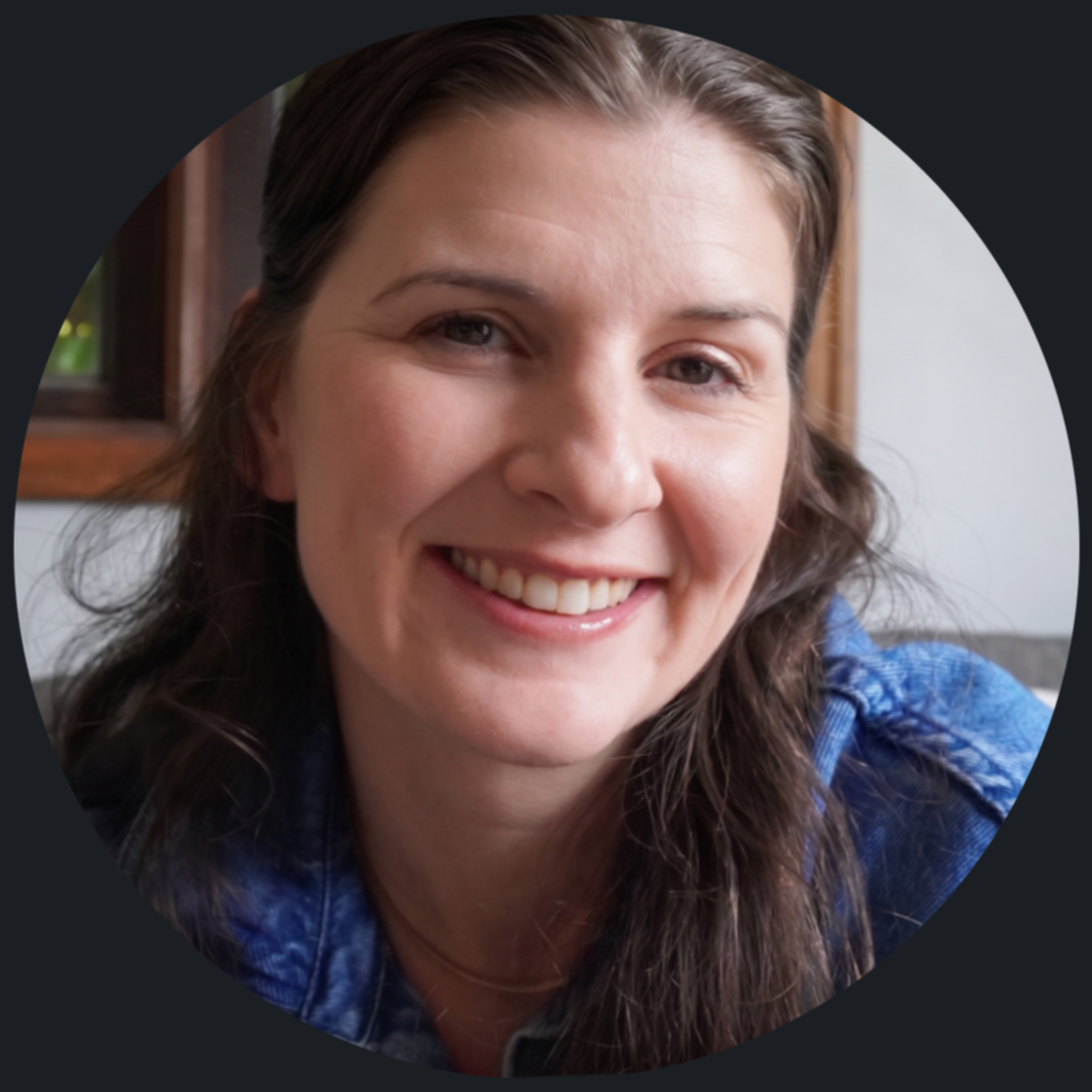
with Bonnie Lerner, MPH
Bonnie is the founder and director at KinForward, which coordinates support for aging parents and their adult children. Her 15 years’ experience in community health include roles at Kaiser Permanente and community non-profits. Bonnie holds a B.A. in Psychology and an MPH from Oregon State University.
Bonnie, thank you for speaking with us! Tell me about KinForward, your mission and how you help people.
KinForward helps adult children who need multiple channels of support for their aging parents. Maybe they need clarity on next steps, or just affirmation that their current approach is appropriate – either way, we bring “been there, done that” to an overwhelming, emotional and complex situation. We are a collective of independent providers with different backgrounds and we work with families directly to create a path of action and implement that path as little or as much as they need. Because we’re independent and not affiliated with an insurance program, health system or assisted living facility, we’re purely on the side of the family; we have no other conflicting economic incentives.
My impression is that a parent at end-of-life is simultaneously something so, so common, and yet it can take you completely by surprise.
That’s how I felt about becoming a mother: it was this whole world that was powerfully new to me, yet also completely universal.
What are the common “story beats” for realizing a parent is beginning a final decline? What surprises adult children?
Yes! You hit the nail on the head. While we know that our parents will inevitably age and need more support, we often push it out of our brains until something is glaringly off.
I love the analogy of becoming a parent, because especially when we are walking our own parents through the end of life, it is deeply transformative, from the journey beforehand, to the grief, to the logistics of cleaning up after the life of someone you loved.
No one is really prepared for the role reversal of parent and child. It is very challenging to watch your parent become compromised and vulnerable, and to become their protector and point person.
Most KinForward clients have parents with increasing symptoms related to neurological disorders, especially Alzheimer’s and Parkinson’s. These create major compromises to parents’ abilities, and the emotion is raw: there is a lot of anticipatory grief with dementia-related diseases in particular.
But even though we mostly work around chronic, degenerative conditions, we repeatedly see adult children very surprised by how suddenly their parent’s abilities decline.
Sometimes it is truly a surprising and dramatic change, such as a decline after a stroke event. Yet even where a client has known that their parent’s health has been shifting for some time, the progression can seem slow and the client is (understandably!) preoccupied with life and eager to think the best of their parent. Then one day, the client looks up and realizes that small declines have accumulated much more dramatically than anticipated.
It Takes a Village
You saw a need for coordination and a team approach to supporting adult children and their aging parents. Who are the players on this team at KinForward?
We absolutely are a team. Our key roles:
Licensed Clinical Social Worker (LCSW): Families are also a team, but between sibling dynamics, parent-child dynamics and the parent’s own opinions, it’s a team with complex internal dynamics. Our social worker brings a neutral, third-party perspective and helps mediate tricky, emotional conversations, sometimes in a group setting and sometimes directly in one-on-ones. She is also the quarterback for other experts, and helps position their input for success.
Caregiver Advocate: The caregiver advocates supports aging parents who want to stay in their homes and need help adapting their environment to their needs. She brings both meaningful lived experience as well as professional creativity to solving unique home environments.
Nurse/Chronic Disease Manager: Our chronic disease manager is both an RN and a death doula. She supports cases that have a complex medical component, and can engage at each stage from diagnosis to end-of-life with the resources, knowledge, structures and coordination to prioritize comfort and confidence in such serious, complex circumstances.
Death Doula: I really wish that the role of a “death doula” had greater awareness in our culture, because their support can be so powerful. They can help families plan for the death they desire, organize documents and administration, provide comfort and respite for the family during final days and hours, and after the event, manage logistics. This lets the family focus on the people in the room, not the paperwork.
We recently profiled some of our guides on my Substack.They are really awesome humans, and I loved getting into specifics as to their roles and personal callings.
Surprising Dynamics
What’s one way you’ve helped a family that you think may surprise people?
I recently asked one of our Guides if she had seen themes across the many families with whom she’s worked over the years. Her answer surprised me: it was that all the families wanted to be validated and hear that they have done a lot already.
Many adult children come to us feeling guilty they haven’t played a bigger role in their family’s care. But the people who do call us are usually those “point people” who have done so much, but just are not seen for their work. It is your parents, so it is a very tender and emotional journey. You want to know you are on the right track.
Hannah and I joke that our firm has “oldest daughter energy,” though we joke with pride: we’re protective of our clients, we feel our fiduciary responsibility deeply, we really like structure. But “oldest daughter energy” can have tradeoffs within a family. How does KinForward interact with adult sibling dynamics?
For sure, sibling tension and family dynamics are universal across all families – though really, we haven’t had anything too unmanageable in the families we’ve worked with. But it is definitely the case that that one sibling – or the only child – takes a strong lead in project management, which can sometimes lead to resentment or frustration over time.
The most common conflict we see is the financial aspects, where that funding will come from and what processes come around that money.
The Financial Side
So what are the financial factors for adult children caring for parents aging in place or in chronic illness? What’s your advice for financial advisors like our firm? How can we help our clients with this?
The sheer expense of these final years is pretty shocking. If your parent cannot age in place, care communities are incredibly expensive, far beyond what most people would imagine. Supports such as Medicaid or Long Term Care coverage can be very difficult to get, and the process is tedious, guarded by many rules, and incredibly time consuming.
That said, aging in place is certainly not “cheap.” If a family member is a caregiver, you can face loss of income. Many professionals will need to pause or reduce their careers to provide care, and that may not have been in their plan. Furthermore, these years can also overlap when professionals have young children also depending on their time and income.
I would love to see financial planners educate their mid-life clients on funding for their parents’ end of life, whether that’s Medicaid, long-term care or just a greater degree of savings. And of course, encouraging their clients to take retirement savings seriously and to consider whether long-term care insurance is a good fit.
We often wish that financial planning clients hired us a little sooner: we’ll hear things like “we’d love to bring someone into help, just once we’ve gotten things cleaned up and have more certainty.” But of course, our job is getting things cleaned up and managing uncertainty! You don’t have to wait until things are bad to ask for help.
What do you think is the ideal time to bring in help like KinForward? When do you see people reach for help?
For KinForward, I see people delay for several reasons:
They’re just so used to doing things themselves, getting help doesn’t occur to them.
There’s this persistent American individualism, that you “ought” to do it yourself.
They may worry that an expert will judge them for having done things “wrong”
They want to wait until the pain is “bad enough” to justify expense
I wish we could all have a plan in place for our parents that would encompass financial, legal, living arrangements and thinking through a care team should something happen, well before things get bad.
For KinForward’s support, the best time is when something is starting to shift and you need to get in front of it. For instance, if one parent’s health is becoming more compromised and you are worried about the other parent being the caregiver due to age, bring us in. If you are beginning to worry about mobility but do not know how to talk to your parents, bring us in. We are especially valuable in those moments, before it’s a crisis and there’s chaos to unravel. We love to create a plan before family members burn out and while your parent has more choices and more opportunity for input.
That said, most of the time, we’re brought in when there is something urgent – and we’re used to that, and we’re ready for it.

Credit: https://kinforward.com/
If someone thinks that KinForward could be a fit for their family, what’s the best way for them to learn more about your services and to get started?
Visit us at kinforward.com to learn more or if you feel ready to discuss your family, set up a free consult here: https://calendly.com/bonnie-kinforward/explore
We Help Our Clients With the Difficult Topics
Yes, there’s a good piece of strategy, but most of good estate planning is chores. It’s keeping your account beneficiaries up-to-date, retitling your accounts, finding the settings in your Instagram account so someone could shut down your account if necessary. Nothing like existential reckoning mixed with lots and lots of paperwork.
When you work with a financial advisor like RightWise Wealth, we streamline this process with trackers and check-ins. Always available to answer questions, our advisors are your whole-financial-life chore buddy.
(Also, our financial planning fee includes end-of-life documents, including wills, trusts, etc. Since you’re already paying for it, you’re one step closer to completing these!)







We all know our parents will eventually age and pass — why is it always still a surprise? What can we learn from someone who works with these groups every day? We spoke with Bonnie Lerner, founder of KinForward, which coordinates team support across counselors, caregiver logistics and even death doulas to help adult children take care of themselves while also taking care of parents in the final stages of aging.